
Choosing the right problem: How Helen Zhou scopes the right variables to optimize
Helen Zhou is building a human liver–heart chip to test whether insect and mycelium proteins are safe to eat for decades. Her hardest problem isn’t technique. It’s deciding which variable deserves the next three months.
The project: a human liver–heart organ-on-chip platform
“In a system like this, it’s very complex. There are so many variables that you can always optimize, always optimize. But it’s very important to think: is this aspect important enough for us to optimize right now?”
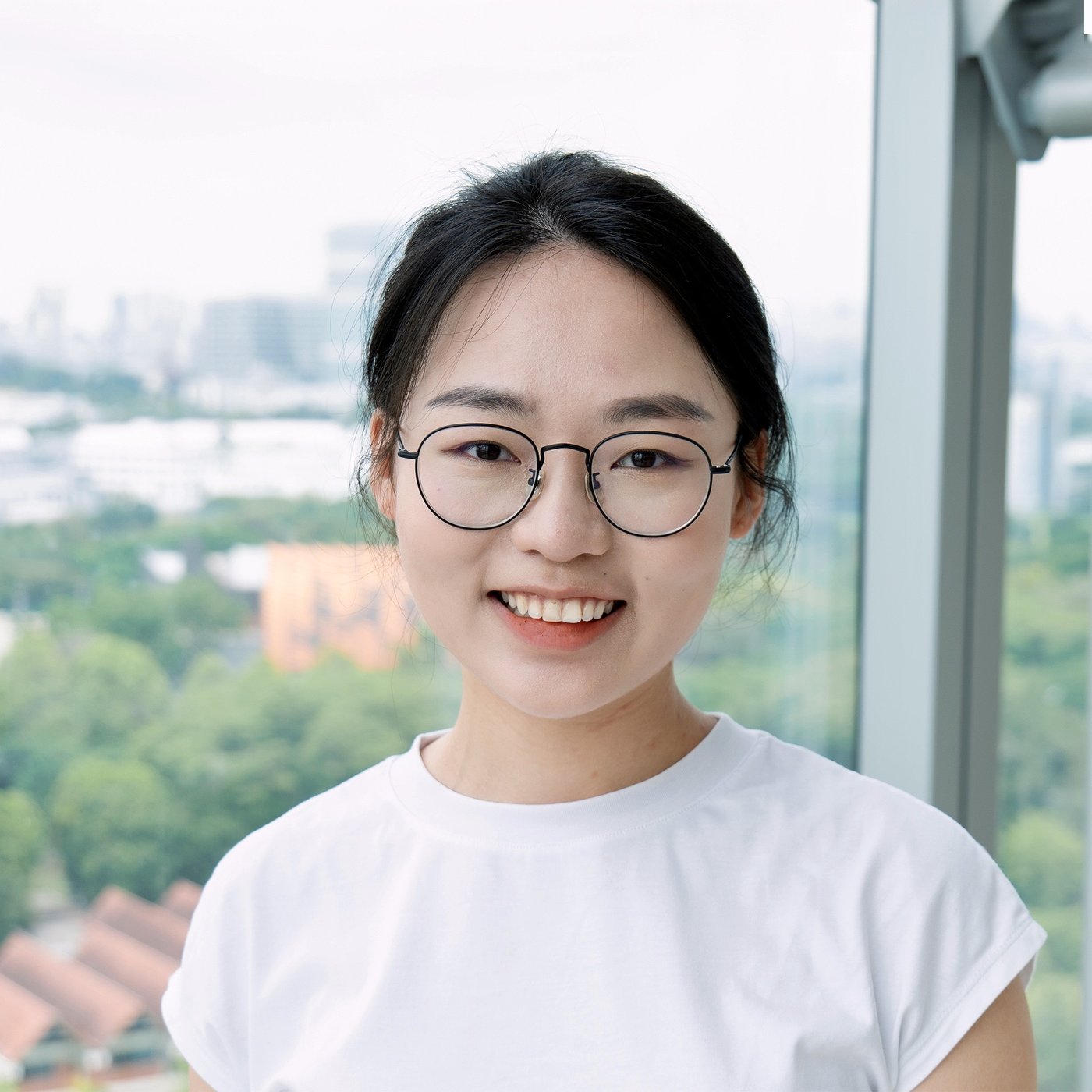
Helen Zhou, research fellow at the Mechanobiology Institute in the National University of Singapore, has three active team members and a project that started this year. For her, every month spent on the wrong variable is a month wasted. I sat down with her on August 20th to discuss her work and how Kasvu Discovery ties into that process.
Zhou is building a human liver–heart organ-on-chip platform to test novel food-derived toxicity. The question behind it is one the alternative-protein industry has largely been able to defer: what are the safety profiles of novel foods, like insect proteins or mycelium proteins, and what happens to a consumer who eats them for years rather than weeks?
Answering that means borrowing hardware from one field and pointing it at another. The microfluidics, the cell sourcing, the readouts – most of it is established in biomedical engineering. Almost none of it has been tuned for food toxicology.
“A lot of the concepts are already established,” Zhou says, “but we still need to optimize the chip, and then test a lot of food-derived toxins.” Then comes the harder half: “We need to do this translation of what each signal means, and whether we can safely say that a toxin is safe or not.”
This is currently being done by three people. Her lab has around 25 researchers across many projects, but this particular one started this year and is still in incubation – planning, trial rounds, preliminary data. Get the data, and it becomes a formal five-or-six-person team, but that’s where the runway ends.
Choosing the right problem
Three people and a system with dozens of tunable parameters is not a resourcing problem. It is a scoping problem, and Zhou treats it as the central intellectual work of the project.
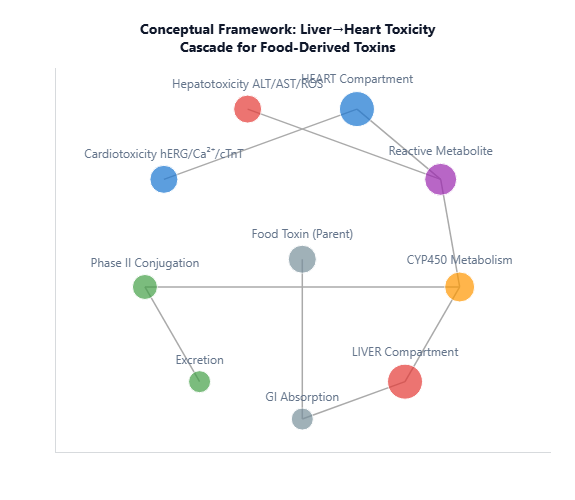
Consider how she decides what the liver chamber is for: The cytochrome P450 family handles the large majority of hepatic toxin metabolism – on Zhou’s estimate, around 80 per cent. So CYP activity is non-negotiable.
The phase II conjugation and excretion branch is real biology too, but Zhou has parked it. “This won’t be our primary focus,” she says, “so we need to focus on how the liver and heart crosstalk.”
Decisions like this propagate into the hardware. If the point of the platform is liver–heart crosstalk, then the flow has a required direction: the food molecule must perfuse the liver first and reach the heart second, carrying whatever the liver made of it. She is equally direct about what the platform can’t do: there’s no GI tract in it, absorption is simply absent, and she names the gap and keeps building.
“Finding the right balance between complexity and the minimally necessary setup that can work reliably. This is the biggest challenge.”
So how do you make that call, before you have the data that would justify it?
Kasvu Discovery as a co-bioinformatician
Zhou uses KD before the pipettes come out. She describes the project as she would to a new collaborator – a liver–heart organ-chip model for novel food toxicity – and asks what direction it should take, what model to build, which liver-metabolised toxins go on to exert cardiac toxicity.
She’s candid about why, and the reason isn’t the one a vendor would write for her. “I’m not totally new in this field. I already have a kind of answer, but I just want to double check. I also wanted it to give me a more objective view so that I’m not biased by my pre-perceptions.”
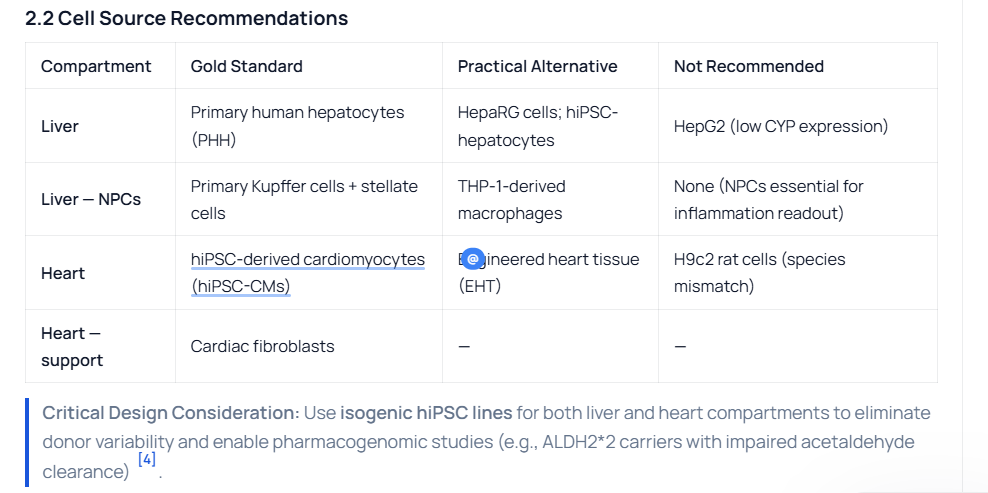
What came back was a framework – absorption, hepatic metabolism through CYP, transfer to the cardiac compartment with hERG, calcium and troponin as readouts – plus design options with trade-offs attached. Some confirmed what she had. Some she overrode: it put primary human hepatocytes forward as the field standard, and she chose HepaRG instead, for stability and lower variability. On the immune compartment she’s still undecided, and unsentimental about where the tool stops: “In the end, the decision maker is still me.”
The exchange that changed the bench work
The most consequential thing Zhou did was refuse an answer from the agent.
Kasvu Discovery had put a Kupffer cell in the liver chamber. Zhou wanted to know why; not as a formality, but as a challenge to a design choice that would cost her time and consumables. “I really challenge it. ‘Why do we need this or that cell type?’”
It held the position: Kupffer-mediated inflammation amplifies hepatotoxicity. The resident immune compartment doesn’t just observe liver injury, it magnifies it, which makes it load-bearing in a platform whose entire output is a toxicity signal.
“That is something I didn’t really pay attention to in the past,” Zhou says. She went to the literature, found it held up, and it’s now an engineering focus: she’s adding Kupffer cells to her HepaRG cultures, and the inflammatory markers are rising as predicted. An answer she nearly discarded became an experiment on her bench. “I wouldn’t know if I didn’t challenge it.”
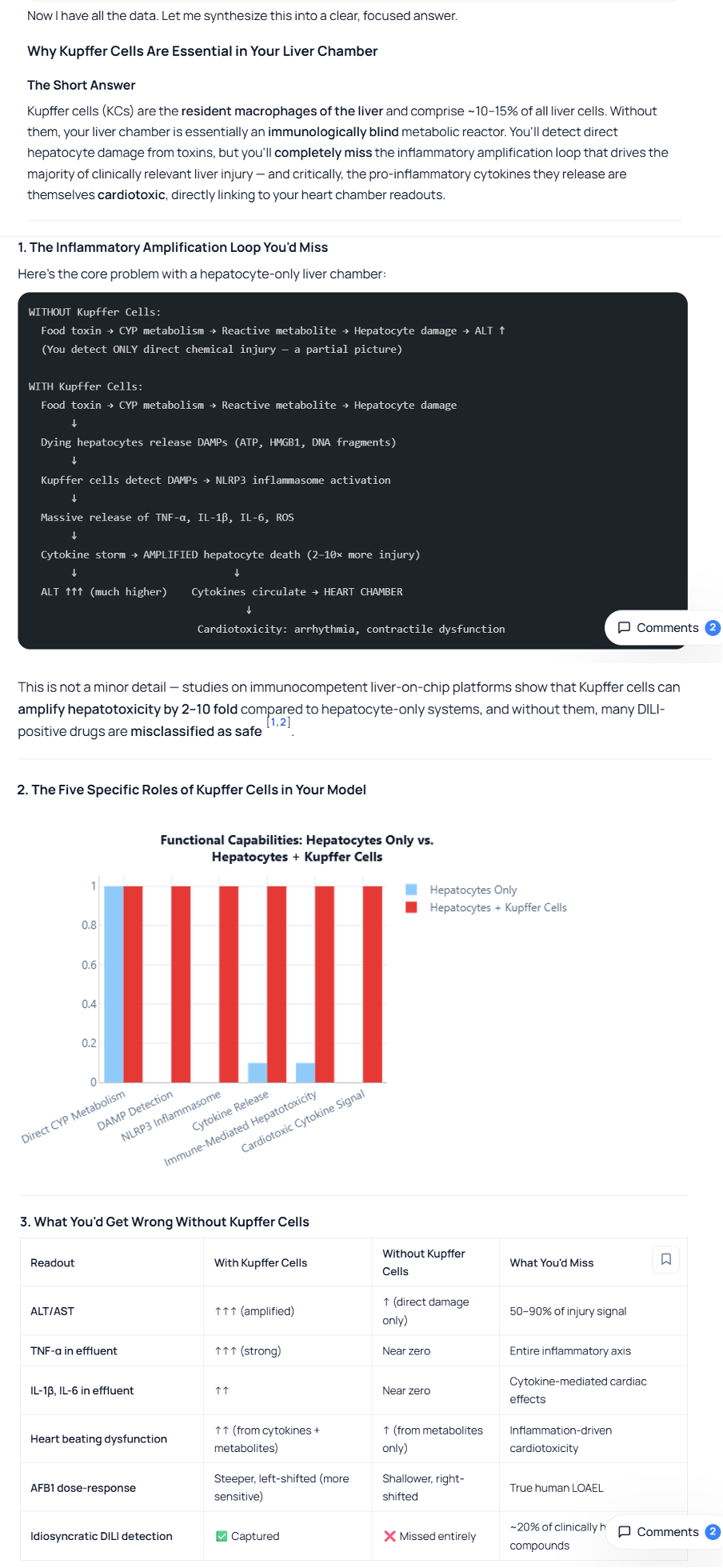
It doesn’t always insist. When she pushed the other way (‘Is a full four-cell cardiac organoid really necessary?’) the answer was no, with a tiered approach recommended and a comparison table to argue from.
This is the specific thing Zhou says she couldn’t get elsewhere. “I actually try to use, for example, Gemini, and Gemini always agrees with whatever I challenge… it never defends [its position].”
ChatGPT she rates more precisely: fine for rewriting materials, not for scientific rigour. “When it comes to intellectual exchange and debating over certain research topics, it doesn’t really hold its ground.”
A model that agrees with a specialist has removed the only thing the specialist came for.
So why not just ask a colleague?
Zhou has around 25 colleagues and a collaborator with validated protocols. But what she’s describing is five to six hours a week of sustained back-and-forth, and that isn’t something you can requisition from a busy lab. The same depth from her lab mates would take two to three times as long – not because they know less, but because “everyone is so busy, so it’s very difficult to grab them and sit down for a deep conversation.”
What those hours protect isn’t effort, it’s direction: “Thinking is sometimes more complex and more important than doing [the work]. Do we do the right experiments? Does this experiment lead us in the right direction?”
What Kasvu Discovery isn’t good at (yet)
Zhou didn’t spend the interview being complimentary, and the criticism is more useful than the praise.
She tested the boundary and found it honest. Asked about her second project: How does cell state affect flavour in cultivated meat? Kasvu Discovery said the question was outside its expertise and offered journal sources rather than an answer. She values the refusal, and notes the sources still left her doing the searching.
Who it’s for
Zhou’s own answer is better than anything our marketing department would write. The strength, she says, is the deep dive that ends in a detailed experimental plan and a framework you can start a paper from – the co-scientist idea is the part that’s really strong. And the people who get the most from it are “researchers, scientists, and [people] who really get their heads down with the lab work, with wet lab.”
If that’s you, instead of a feature tour, bring the scoping decision you’ve been circling for a month, and spend an hour arguing about it.
Kasvu Discovery. Free to try, no credit card required.
This interview was conducted by a member of the Kasvu Discovery team in collaboration with the scientists who have helped us build the platform since its inception. We aim to sit down with professionals each month and talk about the different ways Discovery bakes into their workflows. Stay tuned.